
Flora Incognita | EN
  • Apps
    • The Flora Incognita App
    • The Flora Capture App
  • Blog
  • Publications
  • Citizen Science
  • Projects
    • Flora Incognita
    • Flora Incognita++
    • FloraFlux
    • Cooperations
  • Media
    • Downloads
  • FAQ
  • DE
  • Click to open the search input field Click to open the search input field Search
  • Menu Menu
Blog - Latest News

Citizen Science: Update from the PollenNet Project

25. September 2025/in Project/by Anke Bebber

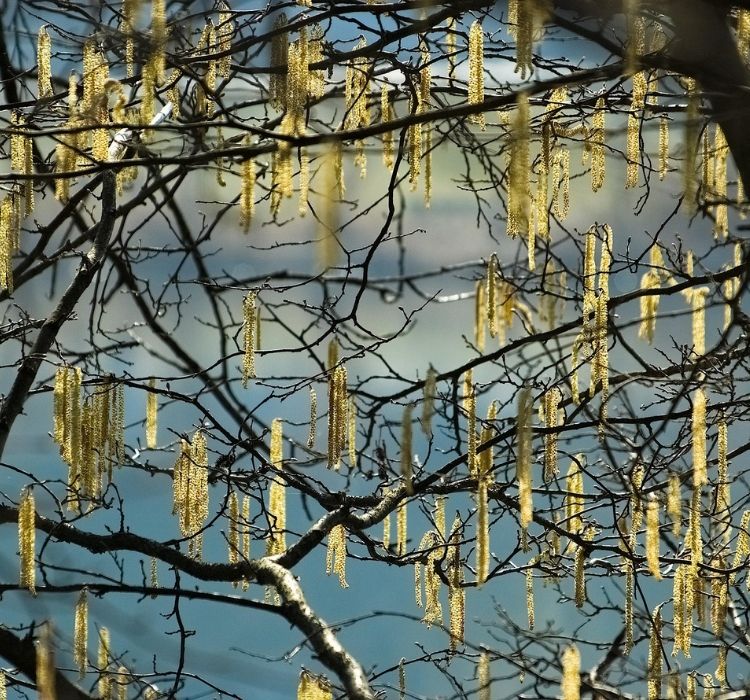
Last season proved: PollenNet thrives on its community. Thanks to tens of thousands of observations from across Germany, we were able to record the hazel flowering in detail. The data not only covers large parts of the country, but also spans many weeks – a valuable basis for our research.

What we have achieved

Our first goal has been achieved: The dataset is large enough to train an AI that can automatically recognize the hazel flowering phases, from beginning to end. We will now focus on the concrete implementation of this step.

Where we’re headed next

The next focus is again on hazel blossoms. We hope that you will continue to diligently document hazel blossoms in the winter of 2025/26 to create another dataset that will enable new research questions. 2026 will be exciting, as we hope to gather data that will allow us to link citizen science data with weather information, pollen levels in the air, and allergy symptoms, thus bridging the following data and questions:

– Flora observations (When and where does the hazel blossom?)
– Weather data (How does the weather affect the hazel blossom?)
– Pollen data (What is the pollen concentration locally?)
– Symptoms (How are those affected by allergies doing?)

The connection between these levels is particularly exciting. We want to systematically correlate hazel blossom, pollen count, and symptoms.
Therefore, in the project, pollen traps will be installed in three cities (Leipzig, Jena, and Ilmenau), which will be regularly emptied and analyzed during the winter of 2025/26. At the same time, we are launching a call to find people in these three cities who will keep a symptom diary during this season.
The three measurement sites are intended to provide us with precise insights, but that alone is not enough: For reliable time series, we need support from all over Germany. Therefore, we continue to welcome nationwide hazel observations from the community.

What’s next

– As soon as we have clarified the last remaining questions, we will launch a call for volunteers to record allergy symptoms in a diary. If you live or work in Jena, Ilmenau, or the surrounding area, have an allergy to spring-flowering plants, and would like to support us, you can contact us now at pollennet[at]bgc-jena.mpg.de. We will contact you when things get started.
– In December, we will begin the next wave of hazel observations, followed later by birch.

In short: We are in the thick of it – and we still need you. Every single observation helps us better understand allergies and (in the future) improve pollen count models.


Title image: By creisi via Pixabay

Share this entry
  • Share on Facebook
  • Share on X
  • Share on WhatsApp
  • Share on Pinterest
  • Share on LinkedIn
  • Share on Tumblr
  • Share on Vk
  • Share on Reddit
  • Share by Mail
https://floraincognita.com/wp-content/uploads/2025/09/title_story.jpg 700 750 Anke Bebber https://floraincognita.de/wp-content/uploads/sites/4/2022/11/flora-incognita_logo_horizontal_RGB-e1669665654345.png Anke Bebber2025-09-25 16:13:162025-11-10 12:27:46Citizen Science: Update from the PollenNet Project
X Logo X Logo Followon X

Latest news

Categories

  • Cooperation
  • Flora Incognita
  • Flora Incognita ++
  • Flora Incognita App
  • General
  • Plant knowledge
  • PollenNet
  • Project
  • Science

Archives

  • September 2026
  • August 2026
  • April 2026
  • March 2026
  • January 2026
  • December 2025
  • October 2025
  • September 2025
  • August 2025
  • October 2024
  • August 2024
  • July 2024
  • June 2024
  • May 2024
  • March 2024
  • January 2024
  • October 2023
  • September 2023
  • August 2023
  • July 2023
  • June 2023
  • April 2023
  • March 2023
  • February 2023
  • January 2023
  • December 2022
  • October 2022
  • August 2022
  • May 2022
  • March 2022
  • January 2022
  • November 2021
  • October 2021
  • July 2021
  • June 2021
  • November 2020
  • June 2020
  • April 2020
  • August 2019
  • June 2019

Social media

Mastodon

Facebook

Instagram

YouTube

Project leader

Prof. Dr. Patrick Mäder 

Technische Universität Ilmenau

Dr. Jana Wäldchen 

Max Planck Institute  for Biogeochemistry

Contact

Legal Notice

support@floraincognita.com

Latest News

  • Spices: Black Pepper11. September 2026 - 16:57
  • Spices: Nutmeg11. September 2026 - 16:21
  • Public Domain
    Spices: Saffron6. September 2026 - 18:48

Project management

Prof. Dr. Patrick Mäder 

Technische Universität Ilmenau

Dr. Jana Wäldchen 

Max-Planck-Institut für Biogeochemie

Contact

support@floraincognita.com

Impressum

© Copyright - Flora Incognita
  • Link to X
  • Link to Facebook
  • Link to Instagram
  • Link to Youtube
Scroll to top Scroll to top Scroll to top

Diese Webseite nutzt Cookies. Standardmäßig verwenden wir nur technisch notwendige Cookies.

Technisch notwendige Cookies erlaubenAlle Cookies erlaubenEinstellungen

Cookie and Privacy Settings


Wie wir Cookies verwenden

Die Flora Incognita-Website verwendet Cookies, die für den technischen Betrieb notwendig sind. Darüber hinaus werden Cookies für komfortablere Website-Einstellungen verwendet. Du kannst frei entscheiden, welche dieser Cookies Du zulassen möchtest. Eine erteilte Einwilligung kann jederzeit widerrufen werden. Weitere Informationen sind in unserer Datenschutzrichtlinie zu finden.

Google Webfont Einstellungen:

Vimeo und YouTube Einstellungen:

2
3
4
5
Einstellungen akzeptieren