PollenNet Study 2026
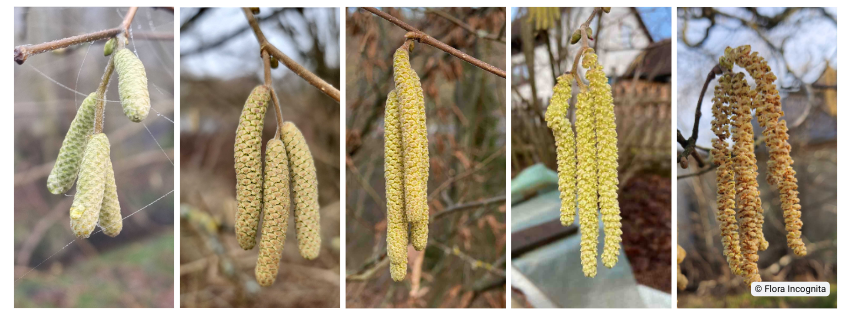

Pollen-related respiratory allergies affect up to 30% of the world’s population, and the trend is rising. In Germany, 15% of adults and 11% of children currently suffer from allergic inflammation of the nasal mucosa, triggered by pollen, at least once in their lives.
The associated health problems lead to considerable economic costs every year—including lost working hours, medical treatment, and reduced productivity. Climate change will further exacerbate the problem in years to come, as earlier and more extended periods of warmth will lead to plants blooming for longer—with the corresponding consequences of longer periods of pollen exposure.
The current pollen forecast provided by the German Weather Service delivers daily regional estimates for eight allergologically important pollen types. However, the local, individual allergic load can differ significantly from these assessments. The reasons are local differences in the flowering intensity of the plants, as well as the effects of weather and microclimate.
In order to enable more accurate and individualized forecasts in the future, the Technical University of Ilmenau, the Max Planck Institute for Biogeochemistry, the Helmholtz Centre for Environmental Research in Leipzig, and the University of Leipzig Medical Center are collaborating in the PollenNet project. The goal: to link allergy symptoms and medication use with local pollen and plant observations—in short, they want to better understand when and why symptoms occur.

The PollenNet study 2025/26 systematically links citizen science data with weather information, air pollen levels, and allergy symptoms. The aim is to provide people with pollen allergies with accurate information about expected pollen counts in the future, as well as advice on how to effectively protect themselves from symptoms. For this, we combine the daily local observations from Flora Incognita and relevant weather data and forecasts.
The study consists of six sub-projects and runs from December 2025 to autumn 2026. Research starts when the hazel trees start blooming and ends when the ragweed has released its last pollen. We will explain what each of the individual sub-projects entails below.
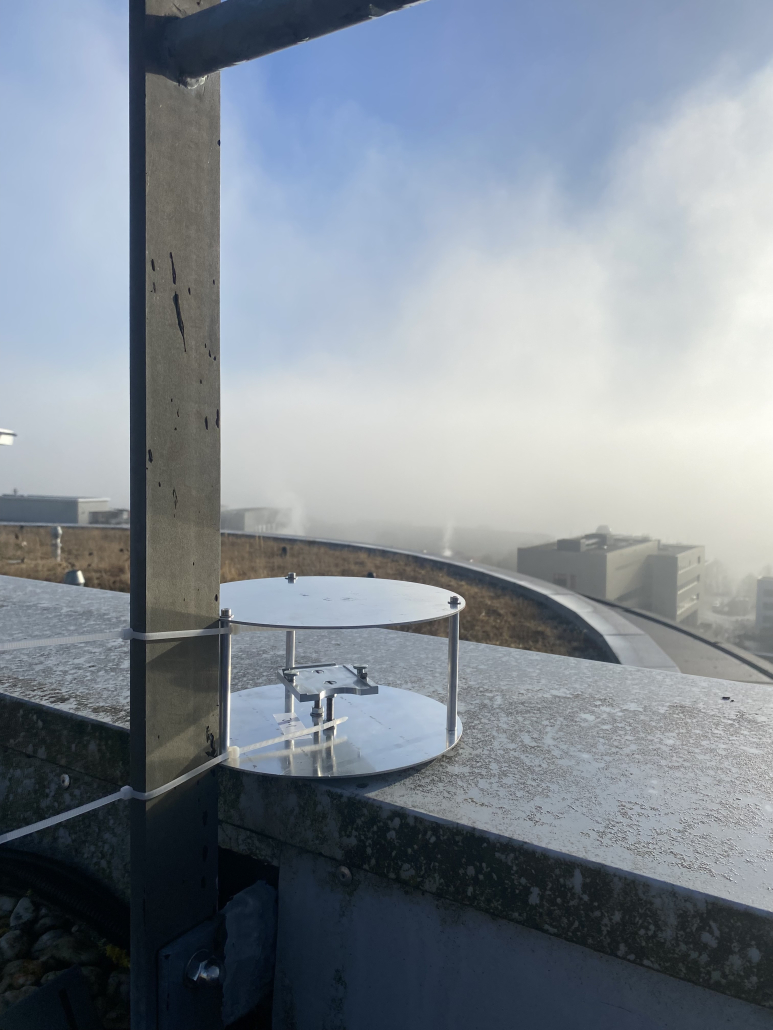
The PollenNet study focuses on the cities of Leipzig, Jena, and Ilmenau. A total of 40 pollen traps were installed there to record the pollen concentration in the air.
Their collection process is passive: protected from the weather, but exposed to the wind, they collect everything in this airflow on sticky slides: in addition to pollen, also dust and other environmental particles, such as tire abrasion. The slides are exchanged weekly by trained personnel and sent to the Helmholtz Centre for Environmental Research in Leipzig for evaluation, where they are cleaned and analyzed by a scientific working group.
Furthermore, the University of Leipzig Medical Center has a large, so-called volumetric pollen trap. It actively draws in defined volumes of air and measures pollen with exceptional accuracy and comparability. This data serves as a reference to better interpret the results from the passive traps.
Pollen measurements are being taken in all three cities throughout the entire study period.
The aim of this sub-project of the PollenNet study is to make the small-scale differences in pollen levels visible – between city districts as well as between different altitudes.
For allergy sufferers, it may not be the city that matters, but the street.
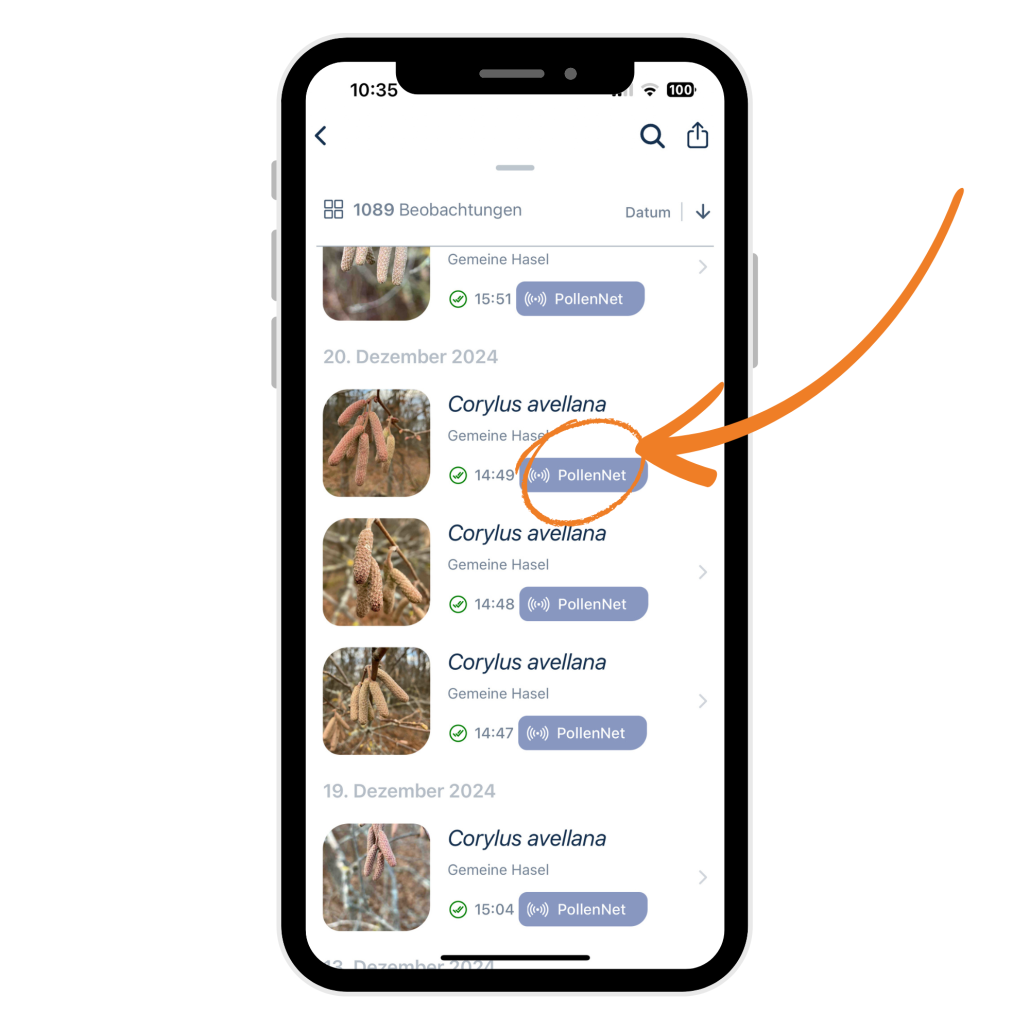
Anyone interested can participate in the PollenNet study! Over the coming months, photos of hazel, birch, alder, grasses, mugwort, and ragweed blossoms will be collected in Germany, Austria, and Switzerland using the Flora Incognita app. To do this, simply activate the “PollenNet” project in the app.
Particularly valuable are photographs of early flowering stages, i.e., when the flowers are still closed or just beginning to open. Only in this way can we investigate how early pollen release can be predicted. As a small additional incentive, participants can collect badges in the app for contributions during the respective flowering phases!
The aim of this citizen science project is to capture as many images as possible of the target species in all flowering stages, from bud to faded flower. This data forms the basis for predicting future pollen levels in the air in conjunction with the flowering stage of plants.
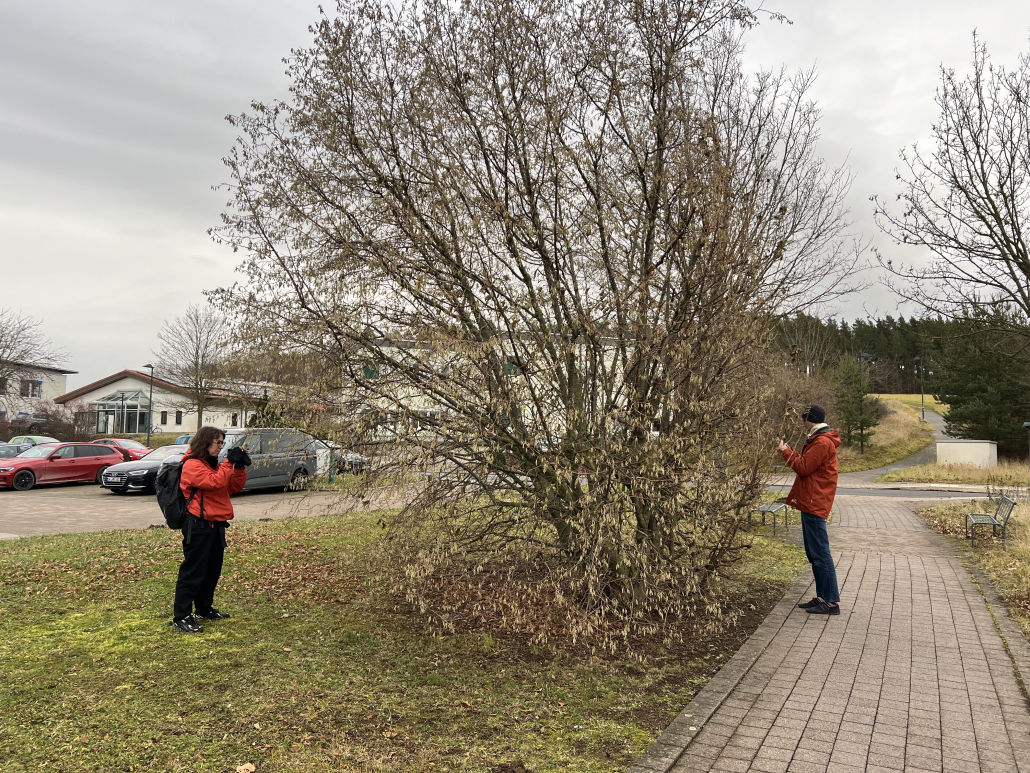
To understand the relationship between measured pollen count and the developmental stage of allergenic plants (phenology), citizen scientists regularly document the flowers of selected species during the study period. Within a radius of 200 meters around each pollen trap, plants are systematically observed and photographed for this purpose.
Alongside the weekly change of slides, trained participants first record the flowers of a hazel bush and a birch tree—from when they’re closed in winter to when they fade in spring. As the study goes on, the focus shifts to grasses, mugwort, and ragweed.
The resulting standardized image data set forms the basis for a model that can automatically recognize the flowering stage of an allergenic plant.
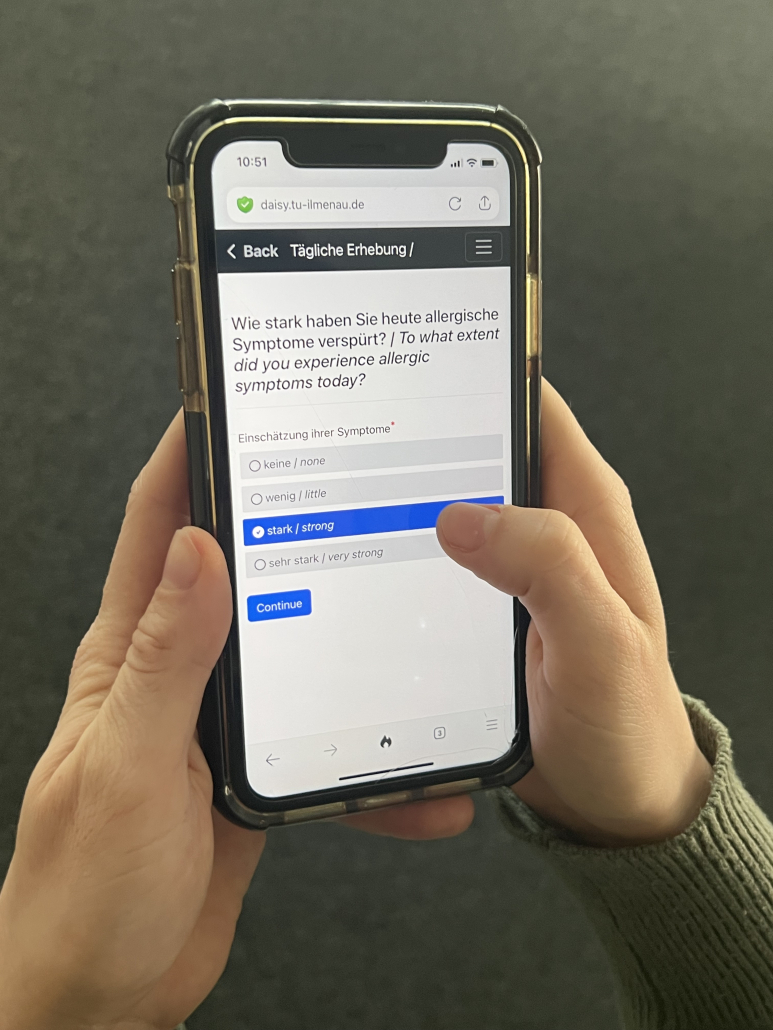
From mid-December, people who live or work in Leipzig, Jena or Ilmenau and suffer from pollen allergies are invited to record their allergy symptoms daily in an online symptom diary. Entry is possible at any time during the entire study period. Ideally, you should start shortly before the symptoms typically begin.
Once the symptoms have reliably subsided, the documentation can be completed. The study will run until autumn 2026.
It takes one to two minutes a day to do. The diary can be conveniently filled out on a smartphone or computer. Among other things, it tracks:
– whether symptoms have occurred
– how severe they were
– in which part of the city one has been spending most of their time
– where the symptoms occurred (e.g., eyes, nose, upper respiratory tract)
Forgotten entries can easily be added later. A medically confirmed diagnosis is not mandatory for participation—the most important factor is participants’ own symptoms.
The online symptom diary can be accessed at the following website: PollenNet Daily Poll.
Alternatively, a paper version is available (register by emailing pollennet@bgc-jena.mpg.de). The protection of personal data is a top priority; it is technically impossible to link the information to individual user accounts.
The purpose of this subproject is to collect small-scale, time-sensitive data on pollen-related symptoms in order to correlate them with the flowering stage of plants and the measured pollen load. This should reveal when which plants trigger which symptoms—and how severely.
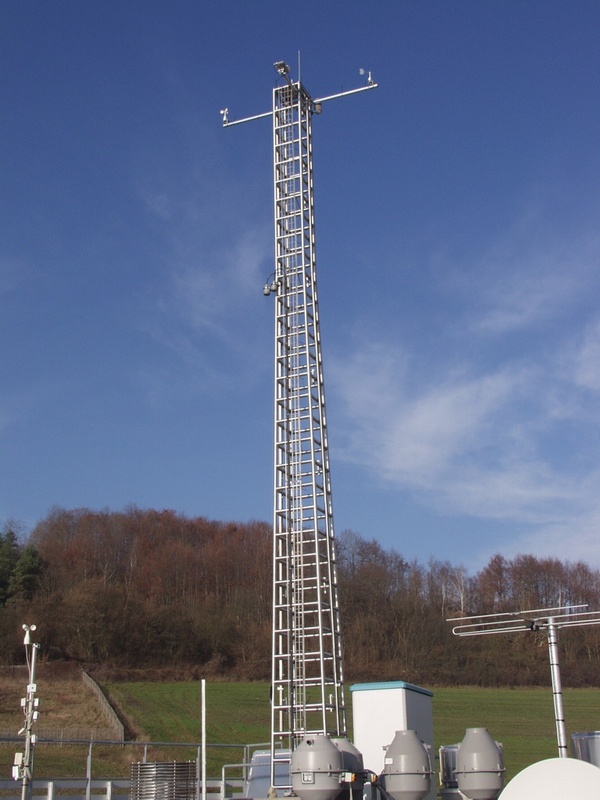
Weather and microclimate data play a key role in enabling more accurate spatial predictions of pollen-related allergy symptoms in the future. These are not collected in the PollenNet study itself, but are obtained from the extensive datasets of the German Weather Service. That includes temperature, wind speed, and precipitation. Which of these factors are particularly relevant for the prediction is part of the research question.
If you would like to be part of the PollenNet Study 2026, we warmly invite you to either keep a daily symptom diary or participate in the citizen science project through the Flora Incognita app.
If you have any questions about the study, you can reach us by email at pollennet@bgc-jena.mpg.de
The PollenNet project is a joint research project between the Ilmenau University of Technology, the Max Planck Institute for Biogeochemistry in Jena, the Leipzig Environmental Research Center, and Leipzig University Medical Center. It is funded by the Carl Zeiss Foundation as part of funding initiative “Durchbrüche”.



 Public Domain